Layered Forest SVG: An Embroidery Designer’s Review
As a professional embroidery designer and product reviewer, I approach every new digital asset with a healthy dose of skepticism. The market is flooded with generic vector art that looks beautiful on screen but translates poorly to needle and thread. When I first opened the Layered Forest SVG, I wasn't just looking for pretty trees; I was evaluating structural integrity, stitchability, and commercial viability for my clients. This design falls under the Shapes category and is marketed as a 3D SVG, primarily for laser cutting and Cricut users. However, its potential as a foundation for a machine embroidery design is significant if approached with the right technical mindset.
First Impressions and Visual Mood
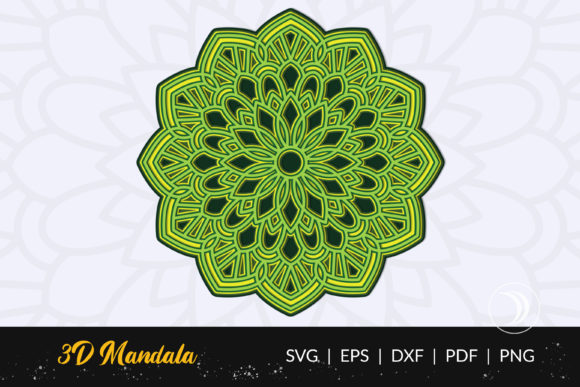
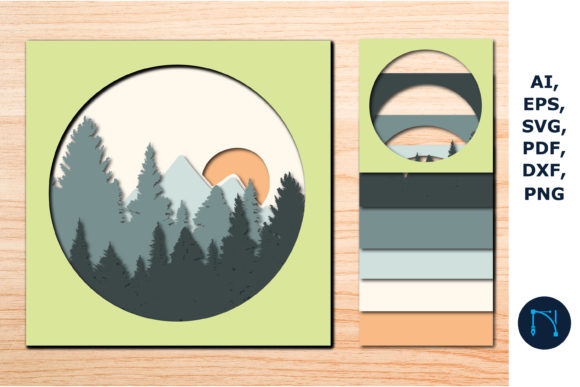
The immediate strength of this Layered Forest SVG is its depth. Unlike flat, single-plane forest silhouettes, this file utilizes distinct layering to create perspective. For an embroiderer, this is gold. It suggests a natural roadmap for color changes and texture variation. The mood is serene yet structured, avoiding the chaotic detail that often causes registration issues in embroidery. It feels organic but disciplined, which tells me it will digitize cleanly without excessive node counts. As a digital embroidery file source, it offers enough negative space to prevent fabric puckering while maintaining enough visual weight to serve as a focal point on custom apparel or home decor.
Real-World Application: The Custom Tote Bag Test
To truly evaluate this asset, I mentally placed it into a current client project: a line of premium canvas tote bags for a local botanical garden gift shop. These aren't cheap giveaways; they are high-margin retail items where stitch quality dictates perceived value. Using the Layered Forest SVG as a template, I envisioned converting the separate layers into distinct stitch types rather than a monotonous fill.
In this scenario, the background tree layer would work beautifully as a running stitch or light density texture to mimic distant foliage. The mid-ground could transition into a textured fill stitch, while the foreground elements would be perfect candidates for bold satin stitch borders or even an applique design using contrasting fabric. This layering strategy transforms a simple vector shape into a tactile experience. Customers touching the finished tote bag design would feel the dimensionality, reinforcing the "handmade" aesthetic that drives sales in boutique environments. The design’s composition allows for personalization below the tree line, making it versatile for personalized gifts or limited-edition small shop products.
Navigating Technical Constraints and Fabric Choices
While the Layered Forest SVG is versatile, it demands respect for technical limitations. Because this is originally a laser-cut file, the lines are mathematically perfect, which can sometimes result in rigid, unnatural stitching if not modified during digitizing. You must introduce slight imperfections or organic curves when converting this to an embroidery file to avoid a robotic appearance.
Fabric selection is critical here. On stable fabrics like denim or canvas, this design shines. However, use extreme caution on stretchy knits or lightweight performance wear. The multiple layers imply higher stitch density, which can cause distortion on unstable materials. If you plan to use this for sweatshirt embroidery or baby embroidery, you must employ a heavy-duty stabilizer and potentially reduce the density of the inner layers. Dark fabrics present another challenge; the layered effect relies on contrast. If stitching on black or navy, ensure your thread colors have sufficient variance between layers, or the 3D effect will vanish into a muddy silhouette. Always test on scrap fabric matching your final substrate before committing to a production run.
Commercial Viability for Makers and Sellers
For Etsy sellers and creative entrepreneurs, time is money. A complex design that requires constant hoop adjustments or thread trims eats into profit margins. The Layered Forest SVG scores well here because its geometry is logical. The distinct separation of layers makes color sorting efficient. This efficiency is vital for commercial embroidery workflows where batch processing is standard.
Furthermore, this design bridges the gap between digital and physical products. Since the purchase includes SVG, PNG, DXF, AI, EPS, and PDF formats, you can create cohesive branding across platforms. Use the PNG for printable mockups on your website and the SVG for the actual embroidery project. This consistency builds brand recognition and customer trust. Whether you are selling finished holiday embroidery ornaments, embroidered patches for outdoor gear, or nursery decor, the design’s adaptability supports a diverse product catalog without requiring new assets for every SKU.
Critical Pre-Stitch Checklist for Professionals
Before you load this design into your machine or list it in your shop, adhere to these professional protocols:
- Verify Licensing: The product description mentions you can "easily res," but always read the specific license terms included in the zip file. Confirm whether you are licensed to sell finished embroidered goods, digital stitch files, or both. Protecting your business starts with compliance.
- Hoop Size Compatibility: Check the dimensions of the Layered Forest SVG against your available hoops. While scalable, enlarging vector art for embroidery increases stitch count exponentially. Ensure your machine can handle the density at your desired size without exceeding field limits.
- Density Audit: Do not assume the auto-digitize function will optimize this correctly. Manually review stitch density settings. Overlapping layers in a 3D SVG can create bulletproof spots that break needles. Underlay stitches are non-negotiable for maintaining shape on textured fabrics.
- Contrast Testing: Create black and white mockups alongside full-color versions. If the design loses clarity in grayscale, it lacks sufficient tonal contrast for embroidery. Adjust thread values accordingly.
- Washability Assessment: If this is for baby items or kitchen towels, test wash durability. Complex layered designs can trap moisture or fray if edge finishes aren't secured properly. A finished product that fails after one wash destroys your reputation.
Final Verdict on Design Assets
The Layered Forest SVG is more than just a trendy graphic; it is a robust foundation for serious makers. Its success lies in how you interpret the vector data into textile reality. It rewards patience and technical skill with high-end results that justify premium pricing. For the hobbyist, it offers a manageable learning curve in layer management. For the craft business owner, it provides a scalable asset that works across seasons and substrates. Just remember: the file is merely the blueprint. Your expertise in stabilizer choice, thread tension, and fabric pairing is what ultimately brings this forest to life. Treat it as a professional-grade starting point, validate it through testing, and it will likely become a staple in your design assets library for years to come.